
Curious Cholesterol Cases From Clinic, #4: A Young Man With Xanthomas and the Wrong Diagnosis
A Case That Looked Obvious But Was Not

“Curious Cholesterol Cases from Clinic” is a series built around real-world lipid cases, some of which look obvious at first glance but turn out not to be what they seem. They are presented as clinical unknowns for teaching purposes and are relevant to primary care, cardiology, and related subspecialties. This presentation is based on a patient case that we previously published in the report cited below. Please reason through the case as a clinical unknown learning lesson before looking at the reference.
A 23-year-old man was referred for “familial hypercholesterolemia.” He had progressive exercise intolerance since adolescence and yellow nodules on his Achilles tendons, plantar surfaces of his feet, elbows, and buttocks, as below:
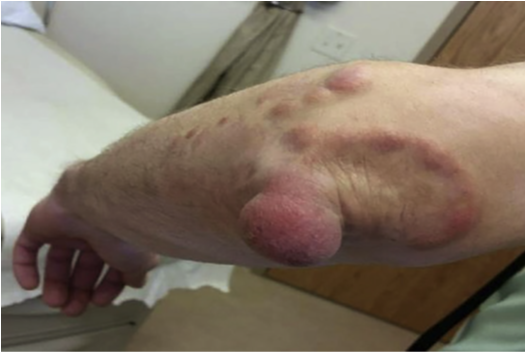
He reported multiple affected relatives with similar nodules. He had an aortic ejection murmur and bilateral carotid and femoral artery bruits.
His lipid panel showed total cholesterol of 393 mg/dL with LDL-C in the low 300s mg/dL range. A sibling had even higher levels.
This looks like severe familial hypercholesterolemia (FH). What would you do next?
(Think, then scroll down)
The pathogenic sequence variant commonly found in his Old Order Amish family,
APOB (G10580A), was not identified.
If this is not FH or familial defective apoB, what biological mechanism could produce this phenotype, and what test would you order next?
(Think, then scroll down)
Plasma sterol testing was ordered and showed striking elevations in sitosterol (217.7 mg/dL, normal <5) and campesterol (109.1 mg/dL, normal <7). Targeted genetic testing then revealed a homozygous mutation in ABCG8 (G1720A), leading to a diagnosis of sitosterolemia, an FH phenocopy.
Further evaluation of his family showed multiple affected relatives with widely variable clinical and subclinical vascular disease despite the same mutation. Table 1 in the reference below summarizes sterol levels, carotid ultrasound findings, and clinical features across the kindred.
How would you treat him?
(Think, then scroll down)
Treatment shifted from statins to dietary sterol restriction and ezetimibe. He had clinical and biochemical improvement. Bile acid–binding resins were added later to further optimize his sterol levels.
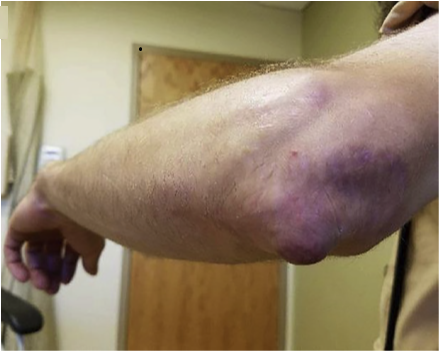
For more details and learning, please see the reference below.
With deep appreciation to Dr. Amy Peterson and Dr. James Deline for including me and my laboratory in the care of these patients. Special thanks to the patients for allowing publication of their kindred.
Reference:
Peterson AL, DeLine J, Korcarz CE, Dodge AM, Stein JH. Phenotypic Variability in Atherosclerosis Burden in an Old-Order Amish Family With Homozygous Sitosterolemia. JACC Case Rep 2020;2:646-650. doi: 10.1016/j.jaccas.2019.12.041.
When I was young my good friend had xanthromas on her knees,elbows, and between her fingers and toes. She never told me why. When she was 25 she went to a dance with her hubby, leaving her 6 month old daughter with a sitter. She had a heart attack at that dance and died. It was a while before I knew what her disease was and that she had been told it would be best to not have children.
Fascinating reminder that not everything that looks like a common lipid disorder actually is, getting the underlying cause right early can completely change long-term vascular risk and outcomes.